Nada, along the coast between Kobe and Nishinomiya, makes more sake than anywhere else in Japan. Several of its famous brewers run museums that are free to enter, and most are a short walk from a Hanshin Line station.
Nada is often called Nada Gogo, the “five villages of Nada”: from west to east, Nishigo, Mikage-go and Uozaki-go in Kobe, and Nishinomiya-go and Imazu-go in Nishinomiya. Together they stretch about 12 kilometres along the shore of Osaka Bay, between the Rokko mountains and the sea.
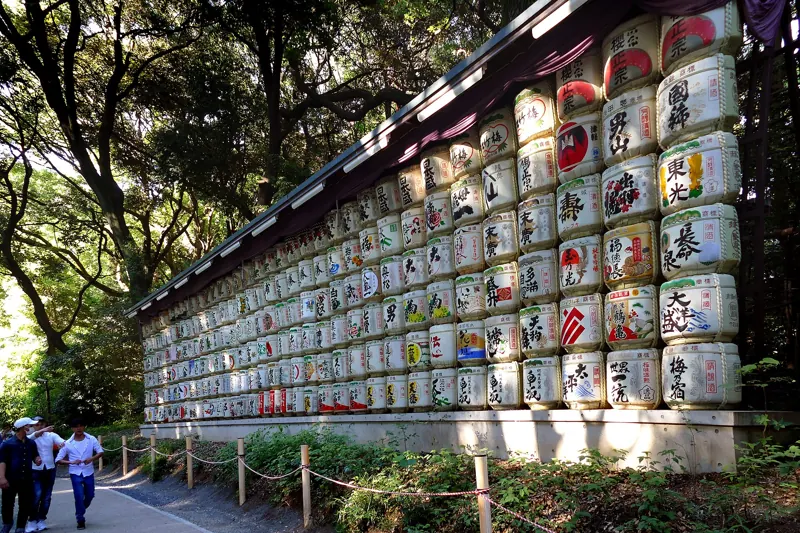
Several conditions made this strip ideal for brewing. Cold winds come down off Mount Rokko in winter, keeping fermentation cool. Hyogo Prefecture grows Yamada Nishiki, the most famous sake rice. Rivers off the mountains once drove water wheels that polished rice. And the coast let brewers ship barrels of sake to Edo (Tokyo), where Nada sake became the drink of the city.
Miyamizu: the water that made Nada
In 1840 a Nada brewer found that sake made with well water from one spot in Nishinomiya was consistently better. That water, called miyamizu, is relatively hard and rich in minerals such as potassium and phosphorus that feed the yeast, and it produces a firm, dry sake. Nada sake is often called “otoko-zake” (masculine sake), in contrast with the softer “onna-zake” of Fushimi. Miyamizu is still drawn from protected wells in Nishinomiya today.
Free brewery museums
Nada is the best place in Japan to visit breweries on your own, because several large brewers run museums with free entry and English information. Among those in our brewery directory:
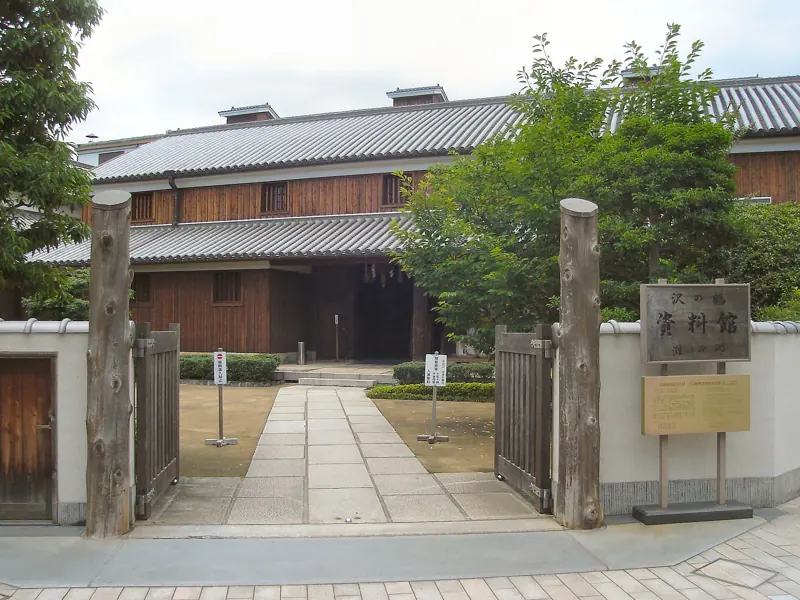
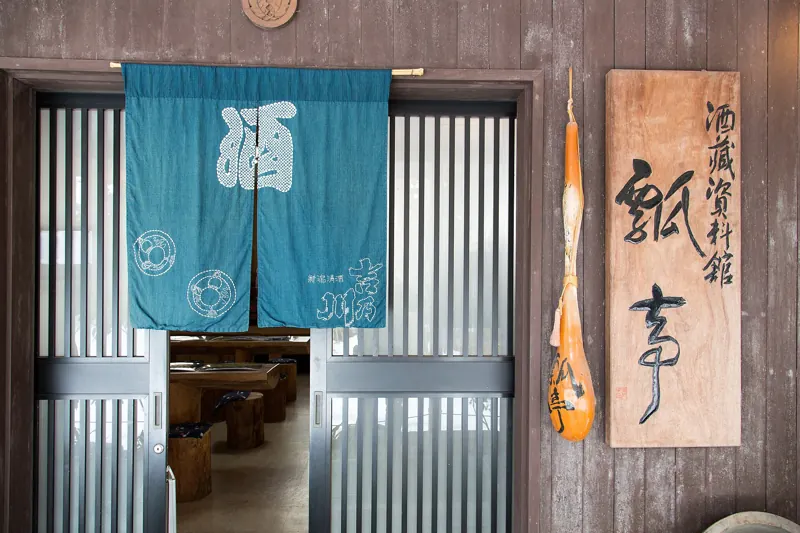
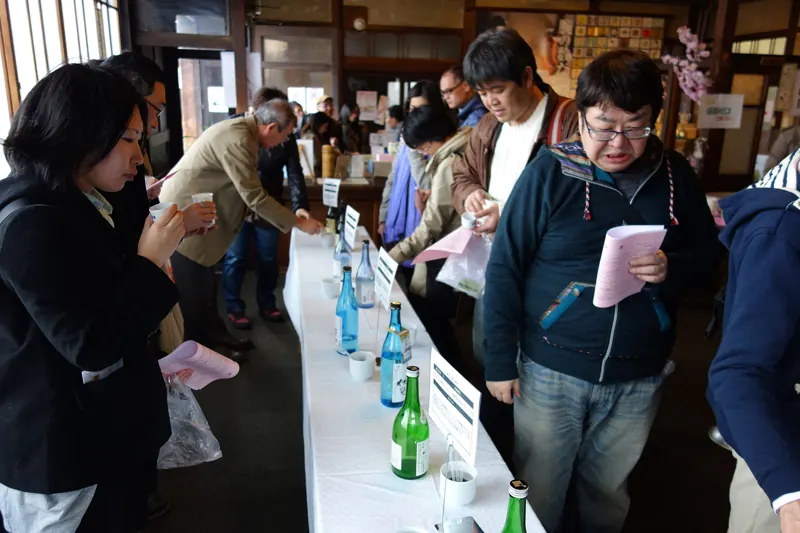
Hakutsuru Sake Brewery Museum in Sumiyoshi is set in an old brewery building, with life-sized figures showing each stage of traditional brewing and a tasting area. Kiku-Masamune Sake Brewery Museum in Uozaki displays brewing tools designated as important cultural property. Sawanotsuru Museum in Nishigo is in a restored brewery building and offers tastings in its shop. Hamafukutsuru Ginjo Brewery lets you look into its production area through windows and taste in the shop. In Nishinomiya, the Hakushika Sake Museum charges a small admission fee.
Opening days differ: several museums close on one weekday. Check each brewery page before you go. Many of Nada’s brewery buildings were rebuilt after the 1995 Great Hanshin earthquake, which damaged much of the district, so some museums also tell that story.
Getting there and getting around
The Hanshin Main Line between Osaka-Umeda and Kobe-Sannomiya runs right through Nada. Useful stations are Oishi (for Sawanotsuru), Uozaki (for Kiku-Masamune and Hamafukutsuru), Sumiyoshi (for Hakutsuru), Ishiyagawa (for Fukuju) and, in Nishinomiya, Nishinomiya and Imazu. JR Sumiyoshi station is also a short walk from Hakutsuru. From Umeda the trip takes about 20 to 30 minutes, so Nada is an easy half day from Osaka.
The museums are spread out. Walking between neighbouring ones takes 10 to 20 minutes, and between the far ends of the district you will want to hop on the train. A good self-guided route is Uozaki (Kiku-Masamune, Hamafukutsuru) then Sumiyoshi (Hakutsuru) then Ishiyagawa (Fukuju), finishing with lunch.
Guided tours in Nada
If you want to go beyond the museums, guided tours visit breweries such as Fukuju (Kobe Shushinkan), which runs its own English tours, and pair sake with Kobe beef or a brewery lunch. Private tours led by a former toji (master brewer) are also available in Kobe and Nishinomiya. See those pages for current listings and prices.
Tips
Bring cash for small purchases. Museum shops sell sake you cannot easily find elsewhere, including unpasteurised and limited bottles, and many will pack bottles for travel. Weekday mornings are quietest. Groups of ten or more usually need to reserve, even at free museums.
Sake tour with souvenir ¥4,500 per person; longer tours ¥30,000 and ¥60,000
Included in tours
Not stated
From each brewery’s official site or the local tourism office, checked 18 October 2026. Click a brewery for hours and the source link.
Bookable tours in Kobe
Prices are as shown on each booking page on 18 October 2026, in the currency shown; check the final price before you pay.
Kobe Sake Brewery Tour in Nada with Guided Tastings
Nada · About 3.5 hours · By Kampai Sake Tours
Brewery tours
A 4 km small-group walk (1:00–4:30 p.m.) through Nada with about 10 tastings, from Ishiyagawa Station. The rating combines Viator and Tripadvisor reviews, as shown on the operator page.
¥17,000 per guest for 2–5 guests (¥34,000 solo) ★ 4.9 (185 reviews) on the operator’s siteBook on operator site
Mikage, Nada · Luxury tour about 4 hours · By Kobe Shushinkan
Brewery toursFood pairingPrivate & sommelier
English-guided tours of the Fukuju brewery: a short sake tour with a souvenir (same-day booking possible) or longer tours with a kaiseki or Kobe beef meal (two weeks’ notice, 2–6 guests).
Some “Book on” links go to GetYourGuide, Viator or Klook through our affiliate links: we may earn a commission if you book, at no extra cost to you. Links to operators’ own websites and Arigato Travel are not affiliate links. Commissions never affect which experiences we list. Details.
Frequently asked questions
What are the five villages of Nada?
Nishigo, Mikage-go and Uozaki-go in Kobe, and Nishinomiya-go and Imazu-go in Nishinomiya. Together they are called Nada Gogo.
Are Nada brewery museums free?
Several are. Hakutsuru and Kiku-Masamune have free entry. Hakushika in Nishinomiya charges a small fee. Check each brewery page for current details.
How do I get to Nada from Osaka?
Take the Hanshin Main Line from Osaka-Umeda towards Kobe. Uozaki and Sumiyoshi stations are about 20–30 minutes away.
What is miyamizu?
Mineral-rich well water from Nishinomiya, discovered by a brewer in 1840. It is used by many Nada breweries and gives a firm, dry sake.